What Are the 4Cs in Education? Examples and Strategies
The 4Cs in education are four essential skills that help students succeed in school, work, and everyday life: Collaboration, Communication, Creativity, and Critical Thinking. Together, these skills help students work effectively with others, express ideas clearly, develop original solutions, and analyze information to make informed decisions.
- Collaboration: Working effectively with others to achieve a shared goal.
- Communication: Expressing ideas, questions, and information clearly and effectively.
- Creativity: Generating original ideas and developing new ways to solve problems.
- Critical Thinking: Analyzing information, evaluating evidence, and using reasoning to make decisions.
What are the 4Cs in education?
The 4Cs of 21st century learning come from the Partnership for 21st Century Learning (P21). In its Framework for 21st Century Learning, P21 identified collaboration, communication, creativity, and critical thinking as core “learning and innovation skills,” alongside key subjects, life and career skills, and information, media, and technology skills.
The idea behind the 4Cs is simple: in a world where students can find almost any fact in seconds, knowing information isn’t enough. Students also need to work with others, share ideas, come up with new solutions, and judge whether information is accurate.
The 4Cs don’t work in isolation. A single group project can ask students to use all four at once. Some schools have even expanded the framework with a fifth, sixth, or seventh C, such as Community, Citizenship, or Character.

What Are the Four Cs?
Here’s a closer look at each of the 4Cs skills: collaboration, communication, creativity, and critical thinking.
1. Collaboration
Collaboration means working with others to reach a shared goal. Strong collaborators listen, share responsibility, respect different viewpoints, and make decisions as a group. It builds on the cooperation students start learning in kindergarten and grows into the teamwork they’ll need in college and careers.
In the classroom, teachers often build collaboration through active learning strategies like think-pair-share and jigsaw, where each student owns part of the task and the group depends on everyone’s contribution.
2. Communication
Communication is the ability to express ideas, questions, and information clearly, whether in person, in writing, or online. It also includes listening carefully and responding respectfully to others.
Today’s students communicate across more channels than ever, so communication skills now include digital and media literacy alongside speaking, listening, reading, and writing. Students need to inform, explain, persuade, and ask good questions in each of these formats.

3. Creativity
Creativity is the ability to generate original ideas and find new ways to solve problems. It isn’t limited to art class. Students show creativity when they design an experiment, propose a new solution to a community problem, or find a different way to solve a math problem.
“Creating” sits at the top of the revised Bloom’s Taxonomy, which makes creativity one of the highest forms of thinking students can practice.

4. Critical thinking
Critical thinking means analyzing information, evaluating evidence, and using reasoning to make decisions. Critical thinkers ask questions, consider other viewpoints, spot weak arguments, and change their minds when the evidence calls for it.
Critical thinking supports the other three Cs. It helps students become thoughtful questioners (communication), helpful teammates (collaboration), and problem-solvers who can test and improve their ideas (creativity).
Why Are the 4Cs Important in Education?
Students today can find an answer with a single search. What sets them apart is what they do with that information. The 4Cs help students move from memorizing facts to applying, questioning, and building on what they learn.
- They transfer across subjects. The same skills students use to debate a novel help them design a science experiment or analyze a historical source.
- They prepare students for life after school. Teamwork, clear communication, creative problem-solving, and sound judgment matter in college, careers, and civic life.
- They increase engagement. Lessons built around discussion, creation, and problem-solving give students an active role in their own learning.
- They support the whole child. Collaboration and communication also build social-emotional skills like empathy, self-awareness, and relationship-building.
“We know educators are eager for proven methodologies to engage students and bring the 4Cs to life in the classroom.”
— Dr. Helen Soulé, former Executive Director, Partnership for 21st Century Learning (P21)
4Cs Examples in the Classroom
Here are four practical 4Cs examples in education that you can adapt for any grade level or subject.
Collaboration Example: Group Problem-Solving
Give small groups a complex problem that no single student could easily solve alone, such as planning a school garden on a budget or figuring out how to reduce cafeteria waste.
How it works: Use a jigsaw structure: each student researches one part of the problem, then brings their findings back to the group. The group combines what they learned to agree on a solution.
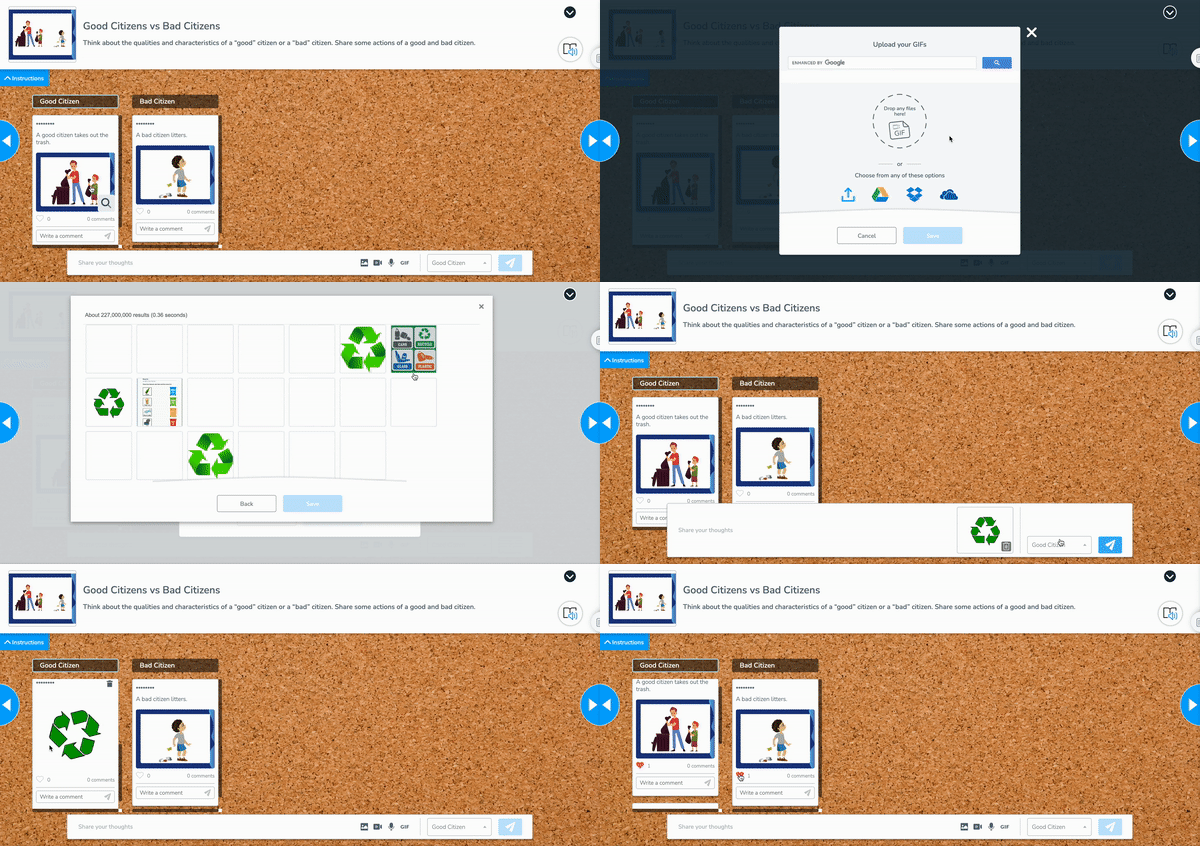
With Nearpod: Students post their research to a Collaborate Board, comment on each other’s ideas, and build a shared plan. You can see every group’s thinking in real time.
Communication Example: Student Presentations
Ask students to share what they learned with an audience, whether that’s the class, another grade, or families.
How it works: Students prepare a short presentation, practice explaining their ideas clearly, and answer questions from peers. Add a peer feedback round so classmates practice listening and responding respectfully.
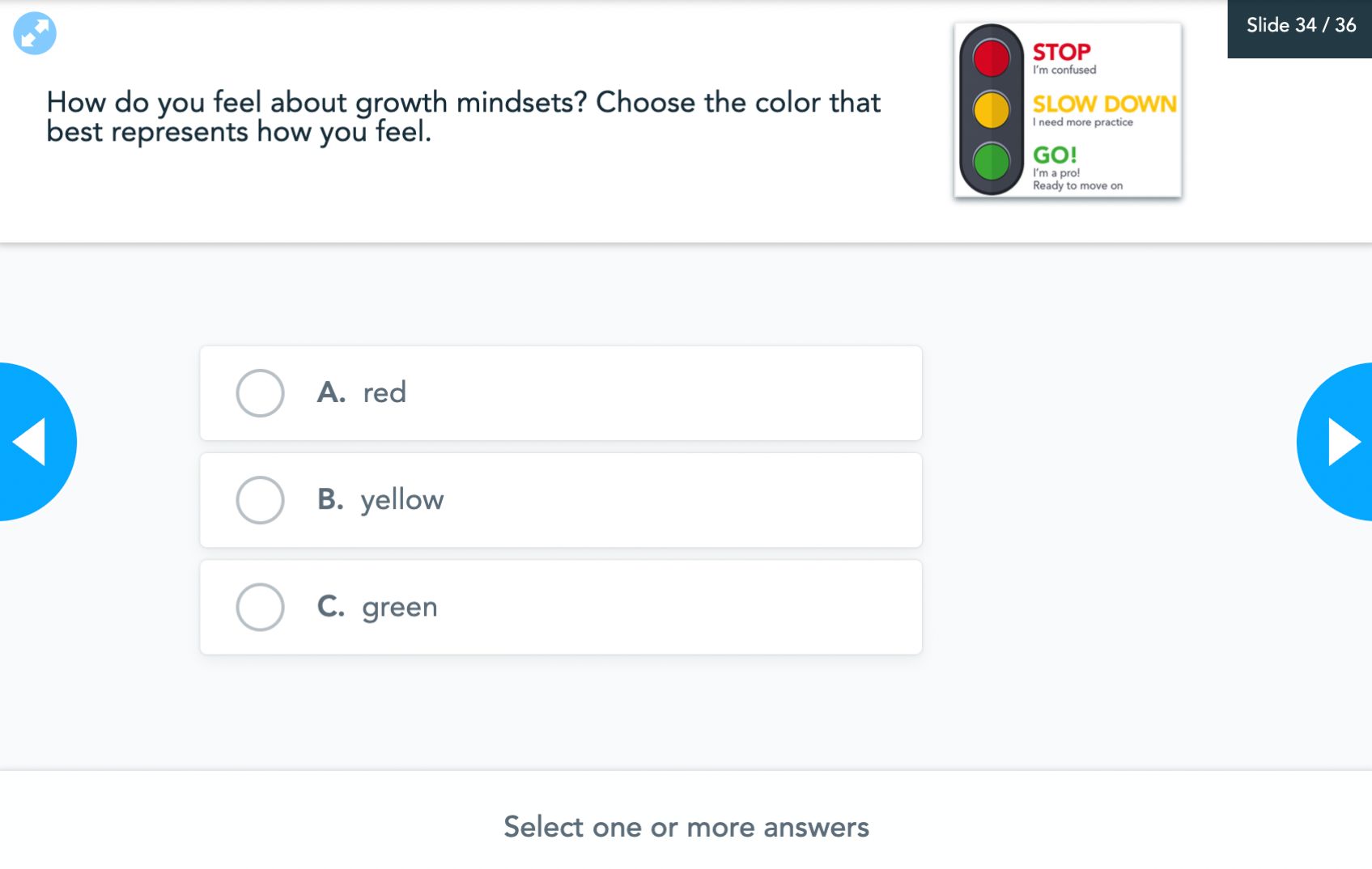
With Nearpod: Before presenting, students can respond to Open-Ended Questions to organize their thinking. During presentations, use Polls to gather audience reactions and spark follow-up discussion.
Creativity Example: Create Multiple Solutions
Instead of asking for one right answer, challenge students to come up with more than one way to solve a problem.
How it works: In math, students might show three different strategies for the same problem. In science or social studies, they might design and sketch several solutions to a real-world challenge, then explain the strengths of each.
With Nearpod: With Draw It, students sketch, label, and add images to their ideas. For example, in the “Designing a City Zoo” lessons, elementary students use Drag and Drop and Draw It to plan zoo layouts while practicing division.

Critical Thinking Example: Evaluate Evidence
Give students several sources on the same topic, such as news articles, data sets, or primary sources, and ask them to decide which evidence is most reliable.
How it works: Students analyze each source, look for bias or missing information, and explain their reasoning. Wrap up with a class discussion or short written argument that uses the strongest evidence.
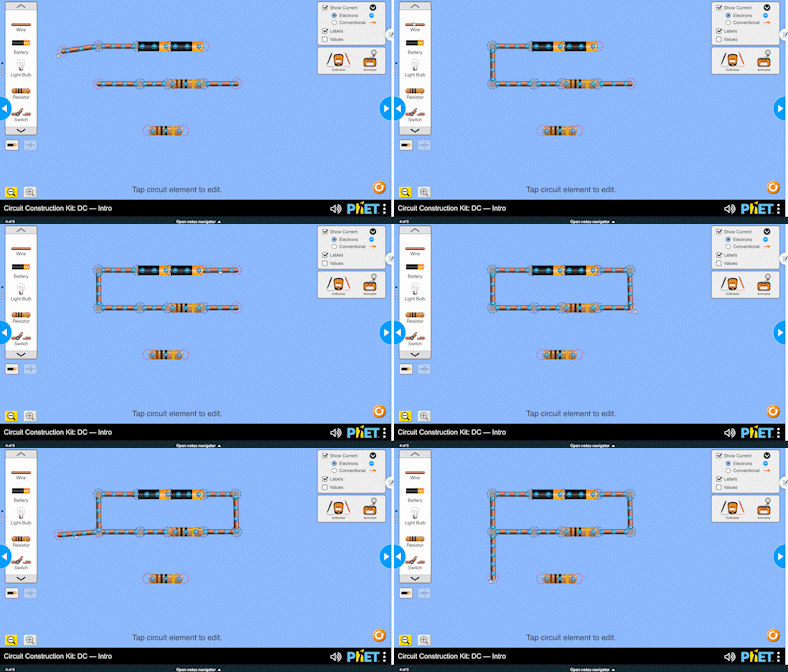
With Nearpod: PhET simulations in Nearpod let students test predictions and analyze results, while Open-Ended Questions ask them to justify their conclusions with evidence.
Use this quick-reference table to plan 4Cs activities in your classroom:
| 4C | What It Means | Classroom Example |
| Collaboration | Working effectively with others to achieve a shared goal. | Small groups use a jigsaw strategy to solve a multi-step problem, with each member responsible for one piece. |
| Communication | Expressing ideas, questions, and information clearly and effectively. | Students present research findings to the class and answer questions from their peers. |
| Creativity | Generating original ideas and developing new ways to solve problems. | Students design and sketch more than one solution to the same real-world challenge. |
Critical Thinking | Analyzing information, evaluating evidence, and using reasoning to make decisions. | Students compare sources on the same topic and decide which evidence is most reliable, and why. |
How to Teach the 4Cs in the Classroom
You don’t need a brand-new curriculum to teach the 4Cs. These 4Cs teaching strategies fit into lessons you already teach:
- Start with one C at a time. Pick one skill to focus on in a lesson, name it for students, and explain what it looks like in action.
- Ask open-ended questions. Questions without a single right answer invite students to think critically, share ideas, and get creative.
- Structure group work. Assign roles (facilitator, recorder, researcher, presenter) so every student contributes and no one does all the work.
- Teach discussion norms. Model how to agree, disagree, and build on ideas respectfully. Sentence stems like “I agree because…” or “I see it differently because…” help students get started.
- Make thinking visible. Have students explain how they got an answer, not just what the answer is.
- Check understanding along the way. Use formative assessment to see how students are thinking during the lesson and adjust before misconceptions stick.
- Combine the Cs in bigger projects. Inquiry-based and project-based learning naturally ask students to use all four skills at once.
- Build in reflection. End with a quick prompt like “What helped your group work well today?” so students learn to name and improve their own skills.
Bring the 4Cs Into Your Classroom With Nearpod
Nearpod gives teachers tools to practice every one of the 4Cs in a single lesson. With Nearpod interactive lessons, students can collaborate on a shared board, answer questions, draw their ideas, and explore simulations, while you see every response in real time.
| 4C | Nearpod tools to try | How it helps |
| Collaboration | Collaborate Board | Students post ideas, comment on classmates’ posts, and build on each other’s thinking in real time. |
| Communication | Polls, Open-Ended Questions, interactive videos | Every student shares a response, including quieter students, and explains their reasoning in writing or audio. |
| Creativity | Draw It, Drag and Drop, VR Field Trips | Students sketch, design, and show what they know in original ways. |
| Critical Thinking | Quizzes, PhET simulations, Open-Ended Questions | Students test ideas, analyze results, and justify their answers with evidence. |
Want to save planning time? The Nearpod Lesson Library includes ready-to-teach lessons across subjects, including lessons that combine all four Cs. For example, Nearpod’s Corinth high school science lessons let students explore 3D models, like the integumentary system, on their own before working together to answer questions. Nearpod’s 21st Century Readiness Program also offers SEL lessons, activities, and videos that support collaboration and communication skills.
Ready to get started? Sign up for free and bring the 4Cs to life in your next lesson.
Frequently Asked Questions About the 4Cs in Education
Why are the 4Cs important in education?
The 4Cs help students develop skills they can use across subjects and in real-world situations. They support teamwork, problem-solving, communication, creativity, and informed decision-making.
What are examples of the 4Cs in the classroom?
Examples include group problem-solving for Collaboration, student presentations for Communication, open-ended projects for Creativity, and evaluating sources or evidence for Critical Thinking.
How can teachers develop the 4Cs?
Teachers can develop the 4Cs through collaborative projects, classroom discussions, presentations, creative challenges, inquiry-based activities, debates, and activities that require students to evaluate information and explain their reasoning.
Are the 4Cs considered 21st-century skills?
Yes. The 4Cs are commonly discussed as foundational skills for 21st-century learning because they emphasize communication, collaboration, creative thinking, and critical thinking across learning contexts.
Can students practice more than one of the 4Cs at the same time?
Yes. Many classroom activities develop multiple 4Cs simultaneously. For example, a group multimedia project can require students to collaborate, communicate ideas, develop creative solutions, and evaluate information.

Darri Stephens is a dedicated LX (learning experience) designer, passionate about creating quality content and programs for kids, families, and educators. With MAs in Education from both Harvard and Stanford, and work experience at best-in-class ed tech organizations including Wonder Workshop, Nickelodeon, and Common Sense Education, she is steeped in the design thinking process and committed to agile and iterative project management, which has resulted in multi-award-winning programs and products.