25 Ice Breakers for High School Students That Actually Engage
What Are Ice Breakers for High School Students?
Ice breakers for high school students are short, low-pressure activities that help teenagers get to know one another, build classroom community, and feel more comfortable participating in class. Effective high school icebreakers can include Would You Rather questions, Two Truths and a Lie, collaborative challenges, common-interest activities, and creative storytelling prompts.
Teachers can use icebreakers at the beginning of the school year, after a break, when introducing a new group, or anytime students need to reconnect and re-engage.
Below, you’ll find 25 fun icebreakers for high school students. Each one includes group size, timing, materials, step-by-step directions, and ready-to-use prompts, so you can pick one and run it today.
Why Use Icebreakers With High School Students?
Remember the first day of high school? New teachers, new classmates, and a room full of people trying not to look nervous. Icebreakers take some of that pressure off.
Strong classroom relationships don’t happen by accident. Research shows that a positive classroom climate helps students feel more invested, engaged, and successful. Icebreakers give students an easy, structured way to start building those connections with you and with each other, along with collaboration and communication skills they’ll use long after high school.
And icebreakers aren’t just for the first week. Use them to reconnect after winter break, re-energize a sleepy class after lunch, or kick off a new group project. Looking for more ideas for the start of the year? Explore these back-to-school activities.
25 Icebreaker Activities for High School Students
From first day of school icebreakers to quick warm-ups for any day of the year, these icebreaker activities for teens work for different group sizes, energy levels, and comfort zones.
1. What’s in a name?
Best for: Small or large groups
Time: 10–15 minutes
Materials: None, or a Nearpod Collaborate Board
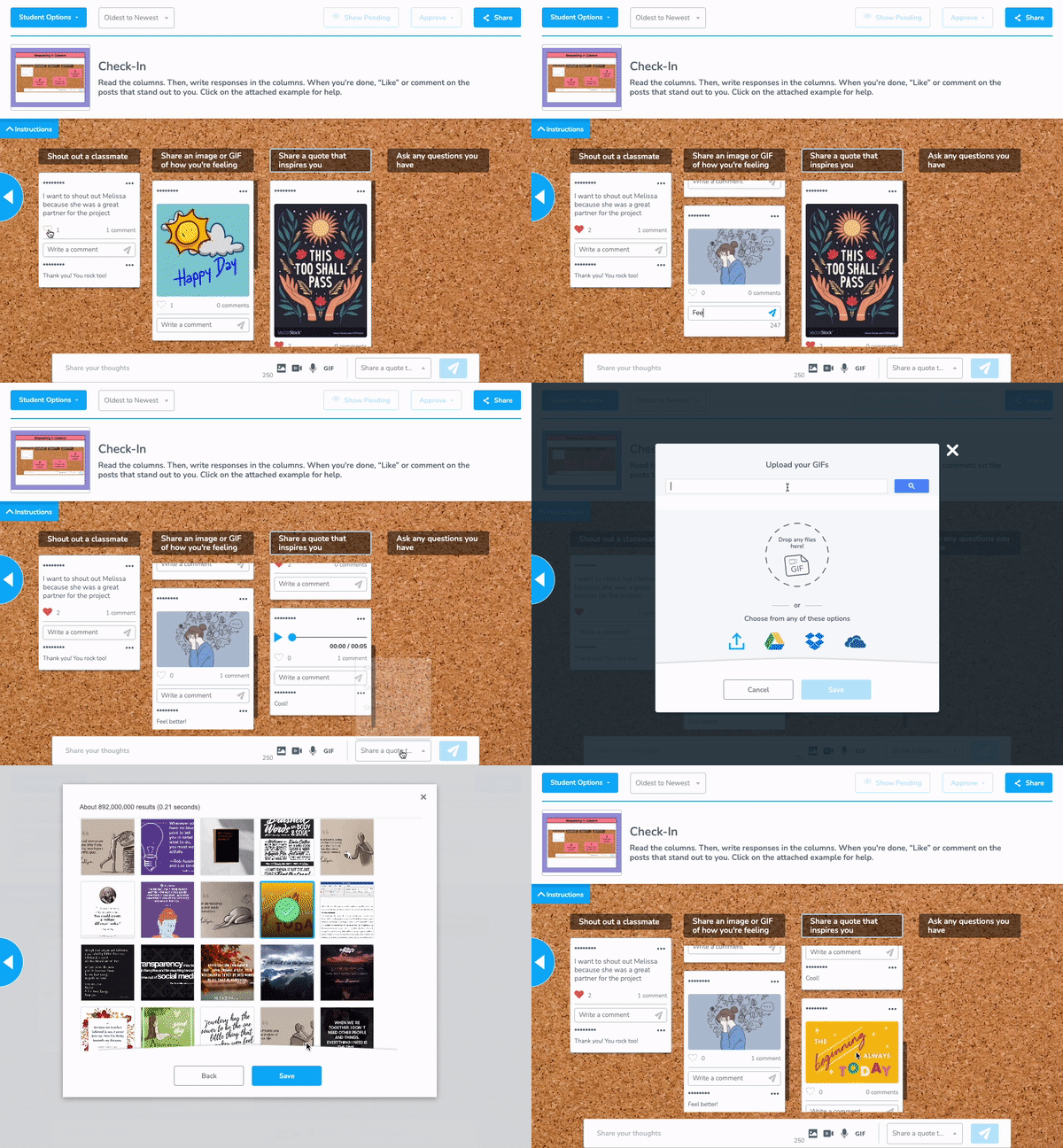
How it works: Give students two minutes to jot down the story behind their name: who chose it, what it means, or how they got a nickname. Then have them share one-minute stories in small groups or with the whole class. To capture the stories, have students post them to a Collaborate Board and add photos later to create a digital class lookbook.
Example prompts:
- Who chose your name, and why?
- Does your name have a special meaning or family history?
- Do you have a nickname? How did you get it?
- What name would you like us to use in class?
2. Six degrees of separation
Best for: Pairs that rotate into new pairs
Time: 10–15 minutes
Materials: None, or a Nearpod Open-Ended Question for reflection
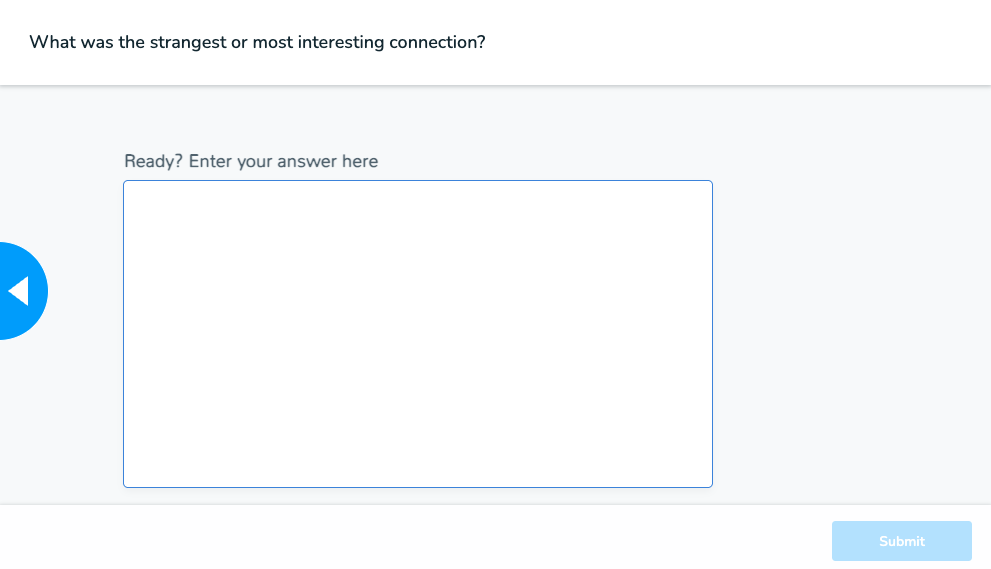
How it works: Inspired by the pop-culture game “Six Degrees of Kevin Bacon,” this activity challenges students to find connections. Pairs list five things they have in common, then each student finds a new partner who shares at least one item on their list, and the new pair makes a fresh list. Keep going until students have made six connections, then wrap up with an Open-Ended Question about the most surprising thing they discovered.
Example prompts:
- What sports or teams do you follow?
- What do you do in your free time?
- Which food do you love, and which can’t you stand?
- What was the strangest or most surprising connection you made?
3. I am a tree
Best for: Large groups
Time: 10 minutes
Materials: None
How it works: Have students form a large circle. A volunteer steps into the middle, strikes a pose, and says, “I am a tree.” Other students jump in one at a time to add to the scene (“I am a swing,” “I am the picnic blanket”). After two additions, the first person picks one element to stay, everyone else returns to the circle, and the scene starts again from that element.
Example prompts:
- I am a tree.
- I am a lighthouse.
- I am a food truck.
- I am a campfire.
- I am a school bus.
4. Long-lost friends
Best for: Large groups
Time: 5–10 minutes
Materials: Nearpod slides with prompts and an audio file of music
How it works: Students walk around the room while music plays. When the music stops and a new prompt appears on the slide, each student turns to the nearest classmate and acts out the scene for about 30 seconds. The more dramatic, the better. Start the music again to signal it’s time to mingle.
Example prompts:
- You see your long-lost friend.
- You see someone you’re convinced is famous.
- You see your favorite kindergarten teacher.
- You see your rival from another team.
- You run into your future self.
5. Would you rather…?
Best for: Large groups
Time: 5–10 minutes
Materials: Nearpod slides and a Poll
How it works: Have students stand in a line or next to their desks. Show two choices side by side on a slide, and students move left or right to show their pick. After each round, reveal the results with a Poll and invite a few students to explain their choice. Theme the rounds around food, hobbies, or study habits.
Example prompts:
- Would you rather be able to fly or be invisible?
- Would you rather give up music or movies for a year?
- Would you rather have breakfast for dinner or dinner for breakfast?
- Would you rather study in total silence or with music on?
6. A six-word story
Best for: Individuals, then small or large groups
Time: 10 minutes
Materials: None, or Nearpod Draw It
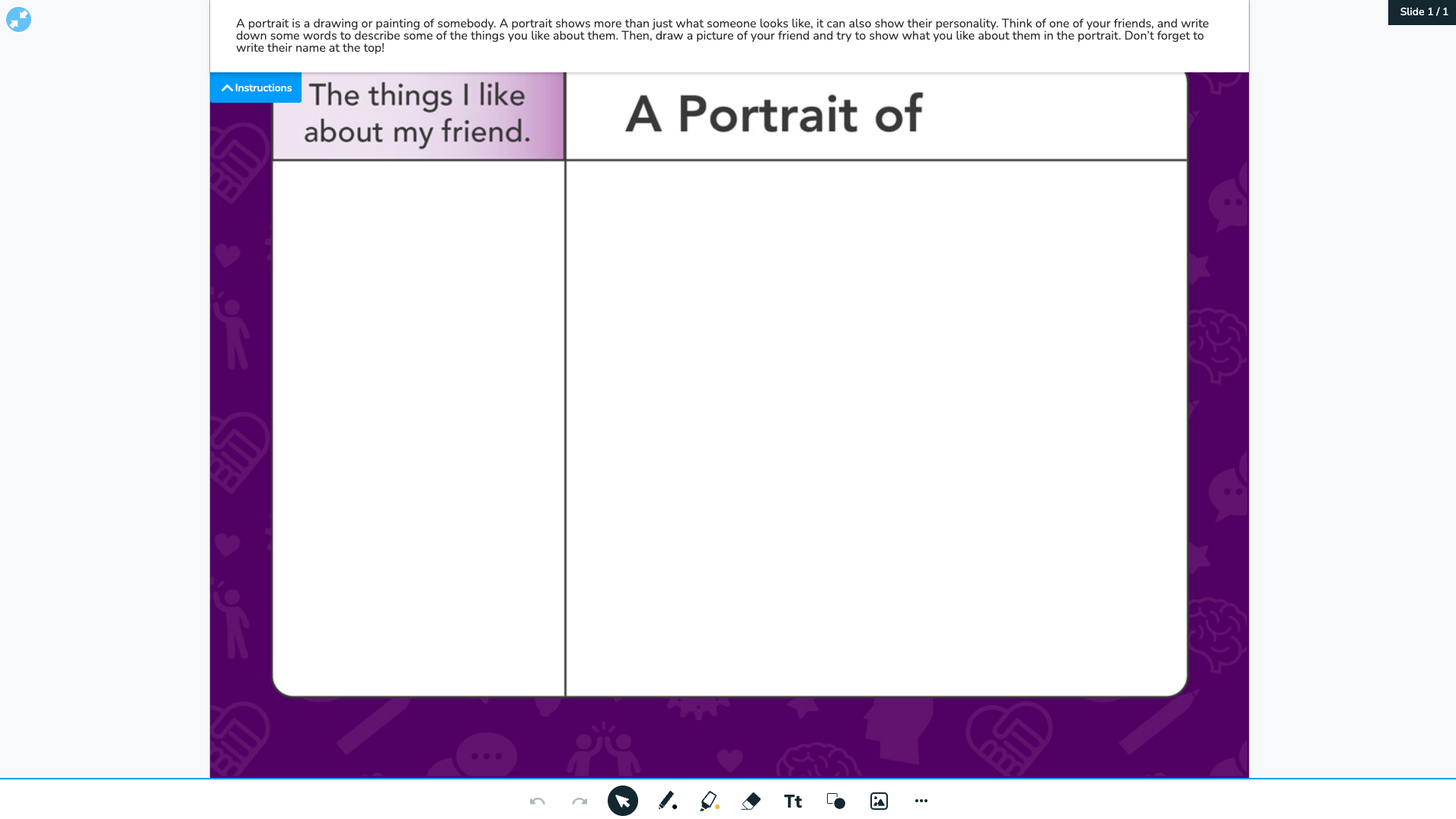
How it works: Put a twist on the classic “what I did this summer” assignment. Inspired by the six-word story challenge, students sum up their summer in exactly six words. Classmates can ask follow-up questions, and students can use Draw It to add doodles to their story.
Example prompts:
- Tell the story of your summer in six words.
- Describe the best day of your break in six words.
- Sum up something new you learned this summer in six words.
- In six words, share what you’re looking forward to this year.
7. Blobs and lines
Best for: Large groups with open space
Time: 10 minutes
Materials: None
How it works: Call out a prompt, and students either line up in order or form small groups (“blobs”) based on their answers. For an extra challenge, don’t let anyone talk. Students will quickly get creative with gestures and facial expressions to work together.
Example prompts:
- Line up by birthday, from January to December.
- Form blobs by favorite dessert.
- Line up by how many siblings you have.
- Form blobs by favorite season.
- Line up by how far you live from school.
8. 3 is the perfect number
Best for: Small groups
Time: 10 minutes
Materials: None
How it works: In small groups, students share facts about themselves until they find three things everyone in the group has in common. Add a theme to make it more challenging, then mix up the groups and play again. Even the most different groups will find surprising things they share.
Example prompts:
- Theme: Food
- Theme: Music
- Theme: Movies and shows
- Theme: Places you’ve visited
- Theme: Favorite childhood books
9. The competition
Best for: Small groups
Time: 15 minutes
Materials: None
How it works: Each group takes a turn announcing a lighthearted “competition” for the whole class. Every group picks a winner from its members, and the winners come to the front to introduce themselves and share their winning answer. Celebrate each winner with applause, then the next group announces a new category.
Example prompts:
- Who has the quirkiest hobby?
- Who has traveled the farthest from home?
- Who has the most unusual pet?
- Who woke up the earliest today?
- Who has the longest full name?
10. Color mixer
Best for: Large groups
Time: 10 minutes
Materials: Nearpod slides in six colors and a timer
How it works: Students walk around the room until you show a colored slide. Then each student pairs up with the closest classmate and answers the prompt for that color. Use a timer to keep rounds short enough to keep energy high and long enough for both partners to share.
Example prompts:
Purple (royalty): Share what you’d change if you ruled the world.
Red (stop): Share one pet peeve.
Orange (motivation): Share one thing that motivates you.
Yellow (creativity): Share the best idea you’ve had recently.
Green (growth): Share a goal you’re working toward.
Blue (sky’s the limit): Share a dream for your future.
11. Categories
Best for: Large groups
Time: 5–10 minutes
Materials: None
How it works: Students stand in a circle. Name a category, and each student adds one example. Anyone who repeats an answer or gets stuck sits down. For a twist, pick a letter and have students name famous people whose names start with it. If someone names a person whose first and last names both start with that letter, the direction reverses.
Example prompts:
- Breakfast cereals
- Sports teams
- Movie titles
- Famous people whose names start with “M”
- Things you’d find in a classroom
12. Yes, and …
Best for: Pairs or small groups
Time: 10 minutes
Materials: None
How it works: Borrowed from improv and design thinking, “Yes, and…” teaches students to build on ideas instead of shutting them down. One student shares an idea, and the next adds to it starting with “Yes, and…”. See which pair or group can keep it going the longest, and add twists (unlimited money, a little magic) to make it more fun.
Example prompts:
- You’re planning a 6-year-old’s birthday party.
- You’re designing the perfect school cafeteria.
- You’re planning a class trip with an unlimited budget.
- You’re inventing a brand-new holiday.
- You’re opening a restaurant on the moon.
13. Two Truths and a Lie
Best for: Small or large groups
Time: 10–15 minutes
Materials: None, or a Nearpod Poll
How it works: Each student shares three statements about themselves: two true and one false. Classmates guess which one is the lie, then the student reveals the answer. Use a Poll so every student can vote, not just the fastest hands.
Example prompts:
- A place you’ve visited
- A hidden talent
- A food you’ve tried
- Something you did this summer
- A goal you have for this year
14. Find Someone Who…
Best for: Large groups
Time: 10–15 minutes
Materials: A bingo-style grid on paper or a Nearpod slide
How it works: Give students a grid where each square describes a trait or experience. Students mingle and find a classmate who matches each square, then write that classmate’s name in it. Each classmate can only sign one square, so students have to talk to lots of people.
Example prompts:
- Find someone who has been to another country.
- Find someone who plays an instrument.
- Find someone who has the same birthday month as you.
- Find someone who speaks more than one language.
- Find someone who read a book this summer.
15. Speed Questions
Best for: Large groups in rotating pairs
Time: 10 minutes
Materials: Nearpod slides and a timer
How it works: Students form two lines facing each other. Show a question on the slide, and each pair has 60 seconds to answer it. When time is up, one line shifts down so everyone gets a new partner and a new question.
Example prompts:
- What’s a skill you’d like to learn?
- If you could instantly learn any language, which would you choose?
- What’s the best thing you ate this summer?
- What app could you not live without?
- What’s your go-to song when you need energy?
16. Would You Rather? Classroom Edition
Best for: Large groups
Time: 5–10 minutes
Materials: A Nearpod Poll
How it works: This seated version focuses on school life and learning preferences. Students vote in a Poll, you share the results, and a few volunteers explain their choice. It’s a fun way to learn how your students like to learn.
Example prompts:
- Would you rather give a presentation or write a paper?
- Would you rather work in a group or on your own?
- Would you rather have short homework every night or one big project a month?
- Would you rather learn from a video or a book?
- Would you rather take a test in the morning or the afternoon?
17. Guess the Classmate
Best for: Large groups
Time: 10–15 minutes
Materials: A Nearpod Open-Ended Question or index cards
How it works: Students answer a few fun questions anonymously. Read the answers aloud (or display them), and the class guesses who wrote each one before the author reveals themselves. Keep questions low-stakes and let students skip any they don’t want to share.
Example prompts:
- What’s an unusual talent you have?
- What’s your dream job?
- Where would you go on your dream vacation?
- What’s a food you will never eat?
- What was your favorite movie as a kid?
18. Common Ground Challenge
Best for: Small groups, then the whole class
Time: 10–15 minutes
Materials: A Nearpod Collaborate Board
How it works: Each group finds one thing every member shares and one thing that’s unique to each person, then posts both to a Collaborate Board. As a class, review the board to find something all groups have in common. Students see how much they share and what makes each of them different.
Example prompts:
- Something everyone in your group likes to eat
- A show or movie everyone has seen
- A goal your group shares for this year
- Something only one person in your group has done
- A place only one person in your group has visited
19. Emoji Introduction
Best for: Large groups
Time: 5–10 minutes
Materials: A Nearpod Collaborate Board or Draw It
How it works: Students introduce themselves using three emojis that represent their interests or personality. Classmates guess what each emoji means, then the student explains. It’s quick, visual, and easy for students who don’t love speaking first.
Example prompts:
- Three emojis that describe you
- One emoji for how you feel about the new school year
- One emoji for your favorite hobby
- One emoji that sums up your summer
- One emoji for your goal this year
20. One-Word Check-In
Best for: Large groups
Time: 2–5 minutes
Materials: A Nearpod Open-Ended Question or Poll
How it works: Each student answers a quick prompt with just one word. Share the responses with the class to get a quick read on the room. It’s a great way to start class after a weekend or break, and it doubles as a quick check-in on how students are feeling.
Example prompts:
- One word for how you feel today
- One word for your weekend
- One word for what you hope to learn this year
- One word for your energy level right now
- One word to describe this class so far
21. Mystery Object
Best for: Small or large groups
Time: 10 minutes
Materials: A bag of everyday objects, or images on Nearpod slides
How it works: Students pull a random object from a bag (or see a surprise image on a slide). Then they explain how it connects to their life or make up a quick story about it. Unexpected objects lead to creative and often funny answers.
Example prompts:
- How does this object connect to your life?
- What would you do with this on a desert island?
- Tell a 30-second story where this object is the hero.
- What memory does this object bring back?
22. Class Playlist
Best for: Large groups
Time: 10–15 minutes
Materials: A Nearpod Collaborate Board
How it works: Each student adds one school-appropriate song to a shared class playlist and explains why they chose it. Play the playlist during independent work time throughout the year. Set clear guidelines for appropriate songs before you start.
Example prompts:
- A song that always puts you in a good mood
- A song that reminds you of summer
- Your favorite song to study to
- A song that describes you
- A song to kick off the school year
23. Six-Word Introduction
Best for: Individuals, then the whole class
Time: 5–10 minutes
Materials: A Nearpod Open-Ended Question or Draw It
How it works: Unlike the six-word summer story, this activity asks students to introduce themselves in exactly six words. Share the introductions with the class and invite volunteers to explain theirs. The word limit makes it less intimidating for students who don’t like talking about themselves.
Example prompts:
- Introduce yourself in six words.
- Your goal for this year in six words
- Your perfect weekend in six words
- What your friends would say about you, in six words
- The best advice you’ve ever received, in six words
24. This or That?
Best for: Large groups
Time: 2–5 minutes
Materials: A Nearpod Poll or hand signals
How it works: This rapid-fire version works as a quick warm-up or brain break. Show two options, give students a few seconds to vote, and reveal the results before moving straight to the next round. Aim for 8–10 rounds in just a few minutes.
Example prompts:
- Cats or dogs?
- Pizza or tacos?
- Morning or night?
- Beach or mountains?
- Text or call?
25. Collaborative Class Challenge
Best for: Large groups working in small teams
Time: 15–20 minutes
Materials: A Nearpod Collaborate Board or Draw It, plus simple supplies (optional)
How it works: Give the whole class one shared goal. Each team works on part of the challenge, then the teams combine their work into one final result. Finish with a quick reflection on what helped the class work well together.
Example prompts:
- Design a class mascot and motto.
- Create five class agreements for a great year.
- Build the tallest freestanding tower using only paper and tape.
- Write a class “time capsule” letter to open at the end of the year.
- Plan the ultimate class field trip.
Turn These Icebreakers Into Interactive Activities
“Good learning is a form of play.”
— James Paul Gee, Professor of Educational Studies
In a typical icebreaker, the same few students do most of the talking. With Nearpod interactive lessons, every student can answer at the same time, including those who are reluctant to speak up. Students can type, draw, vote, or post, and you can see every response in real time.
Here’s how Nearpod features match up with the icebreakers above:
Nearpod feature | What it adds | Try it with |
Polls | Every student votes at once, and results appear instantly for the whole class. | Would You Rather?, This or That?, Two Truths and a Lie |
| Open-Ended Questions | Students type or record answers, so quieter students have a voice. | Six Degrees of Separation, Guess the Classmate, One-Word Check-In, Six-Word Introduction |
Collaborate Board | A shared space where students post text, images, GIFs, and video, then react to each other’s posts. | What’s in a Name?, Common Ground Challenge, Emoji Introduction, Class Playlist, Collaborative Class Challenge |
Draw It | Students sketch, doodle, and annotate their ideas. | A Six-Word Story, Emoji Introduction, Collaborative Class Challenge |
Slides, audio, and timers | Keep prompts visible, cue music, and keep rounds moving. | Long-Lost Friends, Color Mixer, Speed Questions, Find Someone Who… |
Icebreakers can also double as formative assessment. A one-word check-in or a quick Poll shows you how students are feeling and what they already know, so you can plan what comes next.
Short on prep time? Browse the Nearpod Lesson Library for ready-to-teach community-building lessons, or check out these back-to-school activities to plan your first weeks.
Frequently Asked Questions About Ice Breakers for High School Students
What are some fun icebreaker questions for high school students?
Fun icebreaker questions can ask about students’ interests, hobbies, favorite foods, travel, goals, or hypothetical choices. Examples include “What’s a skill you’d like to learn?” and “If you could instantly learn any language, which would you choose?”
How long should a high school icebreaker take?
Most classroom icebreakers can take between 5 and 15 minutes. Shorter activities work well as warm-ups, while longer collaborative activities can be used to build classroom community during the first days of school.
When should teachers use icebreakers?
Teachers can use icebreakers at the beginning of the school year, after a school break, when students join a new class, or whenever the class needs an opportunity to reconnect and re-engage.
How do you make icebreakers less awkward for high school students?
Choose activities that are short, optional when possible, and focused on low-pressure topics. Giving students time to think before sharing and offering multiple ways to participate can make icebreakers feel more natural.
Can you use technology for high school icebreakers?
Yes. Teachers can use interactive tools such as polls, open-ended questions, collaborative boards, and drawing activities to make icebreakers more interactive while giving every student an opportunity to participate.

Darri Stephens is a dedicated LX (learning experience) designer, passionate about creating quality content and programs for kids, families, and educators. With MAs in Education from both Harvard and Stanford, and work experience at best-in-class ed tech organizations including Wonder Workshop, Nickelodeon, and Common Sense Education, she is steeped in the design thinking process and committed to agile and iterative project management, which has resulted in multi-award-winning programs and products.